

Friday, July 15, 2011
Gateway to the Pyrenees
Today's stage 13 of the Tour de France took place in the heart of the Pyrenees. It started in the beautiful town of Pau (Po), birthplace of King Henry IV and of Jean Baptiste Bernadotte, Marshall of France in the Army of Napoleon and later King of Sweden and Norway. Pau is majestically situated in a plateau overlooking the Gave de Pau and benefits from a mild climate in which plants grow abundantly, in fact in the 19th century English well to-do travelers made Pau a resort destination and built here the first golf course on the continent. Pau has been on the Tour de France circuit 63 times making it one of its most popular stages.


Thursday, July 14, 2011
Bon 14 Juillet!

Bastille Day is the French equivalent of Independence Day. It is traditionally celebrated with a large military parade down the Champs Elysees; evening streets dancing often organized by the firehouses in towns and villages all around France and splashy fireworks. There is no special food traditions on this special day unlike America where hot dogs, corn on the cobb and apple pie figure in many Independence Day celebrations. Here is a list of essential French words to help you in the celebration:
- 14 Juillet ( Bastille Day)
- Fete Nationale (National Holiday)
- Feux D'artifice (Fireworks)
- Firemen ball (Bal des Pompiers)
- Hymne National (National Anthem)
- Bleu, blanc, rouge (blue, white, red)
- Defile (parade)
Wednesday, July 13, 2011
Storming of the Bastille

This year is the 222 year anniversary celebration of France's national Holiday- Bastille Day. In 1789 a mob of Parisians stormed a medieval fortress-jail in the middle of the city in search of gunpowder and that was the beginning of the French Revolution. This prison was however more a symbol of the absolute power of the Royalty than the awful prison it was made out to be. At the time of the storming it was nearly empty housing only seven old men, four forgers, two mentally ill residents and a gambling aristocrat. The fortress was destroyed bit by bit on July 15 and its stones carted away and sold as souvenirs and for building material. In fact, Paris Pont de la Concorde was built with stones from the Bastille. Le Marquis de Lafayette sent one of the keys of the Bastille to General Washington and today it is now on exhibit at the museum in Mont Vernon. Today you can view a bit of remains of the Bastille in the Metro Station Bastille (line 5).
Friday, January 26, 2007
Perched villages of the Luberon

On one of our discovery days we will go on the exploration of the picturesque perched villages of the Luberon. The Luberon hills are home to a string of pretty villages. Author Peter Mayle in his series of books about Provence ("Bonjour Provence"; "Toujours Provence") etc.. wrote humoursly about his experience living in the hills of Provence. Gordes is a lovely village with his share of tourists especially in summer. From the top of the village you can get pretty views of the surrounding countryside. Also of interest is the village of Roussillon because of its unique russet color. The stones for its building come from the local ochre colored quarries. Bonnieux, Menerbes, Lourmarin are also picture-postcard perched villages worth a stop.
Monday, December 11, 2006
Avignon --Cite des Papes

Avignon (pronunce avinion (silent ending "n") will be our base for the duration of the trip. Avignon is known as the city of the Popes. From 1309 to 1403, the siege of the papacy moved from Rome to Avignon. The imposing pope's Palace, classified today as a UNESCO World Heritage site, is the largest medieval palace in Europe. The interior is unfurnished for the most part but you get to view the Grand Audience Hall, the Pope's bedroom, the large kitchens and the Grand Tinel Banquet Hall. Avignon is a lively city with lot's of boutiques, restaurants and outdoor cafes. There are also a number of worthy museums to visit such as Musee Calvet and Musee Angladon Dubrujeaud. Avignon's reknown was spread throughout the world via a little nursery rhyme about a little bridge. It goes like "sur le pont d'Avignon on y dance on y dance...". That little bridge does exists. Built in the 12th century, it crosses the Rhone river. Only 4 of its original 22 arches survive.
Monday, December 4, 2006
Spring in Provence-A feast for the senses

Spring appears early in Provence. First indication it is a spring is when the almond trees are in bloom in early March. In April the fields are laid in their crimson red carpet as poppies are in bloom. Best of all, are the produce markets-- staple of every villages and towns. Here you will see the bounty of nature in multi-color--fresh green and white tender asparagus; red cherries; green aromatic herbs (thyme, rosemary, sage, basil); purple garlic and eggplants; mount of black olives. It is a feast for the senses!!!
Thursday, November 30, 2006
How to get to Provence
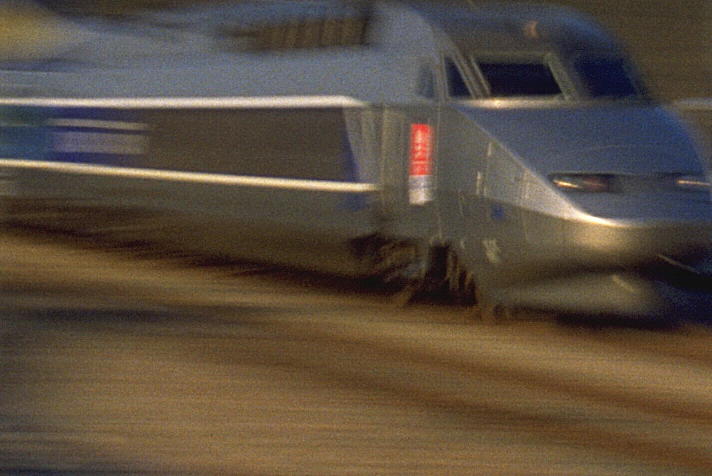
There are a few ways you can get to Avignon. One is by train. Usually you land in Paris and you can get the high speed TGV train to Avignon (about 2h30min ). There is a train station right inside CDG terminal 2. Which is quite convenient for transfer directly to Provence. Other ways to get to Provence is to fly into Marseille airport. Nice is also possible but further east thus you will need to either rent a car and drive to Avignon or via private chauffeur (more expensive) or also via train.
Subscribe to:
Comments (Atom)