Tuesday, December 23, 2014

Galleries Lafayette -A Parisian Institution

Most tourists who come to Paris have visited at least once the supreme Parisian department store --Les Galleries Lafayette.  Each year some 25 million visitors visit this temple dedicated to Parisian luxury.


Just before the turn of the 20th century (1893), two cousins from Alsace , Theophile Bader and Alphonse Kahn, opened a  haberdashery store at the corner of rue La Fayette and rue de la Chaussee d'Antin.  The store benefitted from an ideal location, in proximity of the Opera House and the busy St. Lazare rail station.  In 1903, as the result of the initial success of the store, the cousins undertook an extension of retail space  by buying adjacent buildings along the Boulevard Haussman and rue de la Chaussee d'Antin.

In 1912, the store as we know it today, was constructed by architect Ferdinant Chanut and its interior was designed in the style of Art Nouveau with as its landmark the Byzantine-like central colored glass cupola.


Every year, for the holidays, the main hall under the magnificent cupola is lavishly decorated with a Christmas tree and this year it is with an upside down one.


Happy Holidays!!

For a Parisian Christmas holiday visit  www.enchanted-france.com

#Paris, # Galleries Lafayette, # Paris Christmas

Monday, December 8, 2014

The Church of Saint Germain des Pres Celebrates 1000 Years of History

Photo: Enchanted France
At the center of the popular neighborhood  of Saint Germain des Pres sits a church whose history goes back more than a thousand years.  In the 6th century a basilica was  built by Childeric I, son of Clovis and dedicated to the Patron Saint --Vincent.  It was built in Byzantine style and adorned of a copper roof.   Around 750 it was consecrated to  the memory of  the beloved bishop of Paris- Germain.  For many centuries, the basilica was the royal necropolis of the Merovingians kings and queens up until Dagobert was interred in the newly built Saint Denis Basilica.   In 920, Paris was devastated by yet another Viking raid and the church was completely sacked and burnt to the ground.  It took seventy years to consider rebuilding and the task was taken by Abbot Morard who oversaw the  construction  of a new abbey church  from 990 to 1014.


Over the years it grew to become  an enormous benedictine complex whose land and reach extended well beyond the southern bank of the Seine river.   Throughout the centuries the abbey was  renowned as a spiritual  as well as intellectual and artistic center and notably in the Middle Ages, monks at  the abbey excelled in the copying and illuminations of manuscripts. At the Revolution, the abbey was dissolved, many resident monks executed and the church was turned into a saltpeter storehouse which caused much damage to the walls that can still be seen today.  In the 1803, the building was restored back to the Church and in the mid 19th century, a program of restoration was undertaken by architects Godde and Baltar, the latter of the Halles Pavillons' fame who commissioned a number of frescoes and paintings.

Today the  the Church of Saint Germain des Pres sits prettily in the middle of one of the liveliest districts of Paris that attracts locals and tourists far and wide. Its belfry rises up proudly as a witness of  one thousand years of turbulent yet colorful Parisian history.  Hah, if walls could only talk!!

Cafe les Deux Magots facing the Church of Saint Germain des Pres 

For travel to Paris and France's countryside, visit my website www.enchanted-france.com

tags: Paris, Saint Germain des Pres, France

Saturday, September 6, 2014

Lille's Grande Braderie

This weekend Lille plays hosts to the largest flea market in Europe.  This town in northern France and  only 1 hour by TGV train from Paris welcomes every year on the first weekend of September bargain hunters and bric a brac seekers from all around Europe. Some 3 million people are expected to descend on this magnificent northern city, a gem of 17th century Flemish architecture ...

Francois  Watteau
La Braderie
Musee: Hospice Comtesse de Lille
The origin of  the braderie of Lille   is traced back to 1127 as Lille held a renowned medieval street fair.  In 1446 two merchants asked for the permission to sell roasted chicken at the fair.  The word "Braderie" came into being as  roasting in Flemish is translated as "Braden".  Originally, this fair or Braderie run for seven days.  In the 16th century, this event became  also the occasion for a yard-sale as servants were given permission to sell the used goods from their employers.


Courtesy
Office du Tourisme de Lille
Over  the centuries Lille's braderie had  been mainly a local tradition, but in recent years,  it has gained  much popularity in France and throughout Europe as a 'must' event of the "rentree"   attracting visitors from far and wide.  10,000 exhibitors are expected to line the boulevard and side streets of Lille's center selling  books, old records, furniture, antique and custom jewelry, paintings, used clothing , games and ethnic arts and crafts.  Buyers will be looking for bargains and the unexpected treasure to bring home. The braderie  takes place from saturday early afternoon continues throughout the night until sunday noon.  


The  event is  enlivened by music and other street entertainment and for hungry shoppers and vendors, the traditional mussels , french fries and beer are a "must" to keep going.  

Courtesy
Office de Tourisme
de Lille

Enchanted France specializes in custom travel to France. Visit us at www.enchanted-france.com

Friday, March 7, 2014

A Literary Tour de France

Following  World Book Day lets visit some French locales where major literary works have taken place.

Paris has been the center of so many literary works -Victor Hugo's  "les Miserables" and "The Hunchback of Notre Dame ,  the many novels of Balzac and Emile Zola ;  Henri Miller's  "Tropic of Cancer" and on and on.  Here are two most evocative reads about Paris :

Hemingway in front of Shakespeare &Co.
Hemingway's "A Moveable Feast" - retraces the footsteps of young Ernest when he lived in Paris in the 20's as a struggling author.  He described his walks  in the city, the strolls through  the Luxembourg Garden, the apartment he shared with his wife Hadley in the Latin Quarter, the bistros where he ate, wrote and kept warm, the visit he paid  his friends Gertrude Stein and F. Scott Fitzgerald.


Emile Zola "Ventre de Paris"  (Belly of Paris) . This mid 19th century novel depicts the life and   struggles of the working class in  Paris around the busy  central market of  Les Halles .  Zola was remarkably precise in detailling the sensations- smells, sound, colors of the market.   This atmospheric neighborhood depicted by Zola is only a shadow of itself today. Gone are the central market Balthar pavillons and the  workers and vendors that populated this very intense and picturesque neighborhood; they have been  replaced by trendy boutiques and chic cafes.  Other oeuvres of Zola featuring 19th century Paris include notably "Nana"  "Au Bonheur des Dames" (Ladies' Paradise),  "L'Assommoir" and "l'Oeuvre".


Bovary.fr
Rouen was the setting of the classic novel  "Madame Bovary" by Gustave Flaubert.  Emma, the wife of a provincial doctor  escapes the banality of her country life by spending beyond her means and having adulterous affairs.  Emma spends time away from home visiting her lover Leon in Rouen where they attend the theatre and take horse driven rides around  town.  The author himself was a native of Rouen.

Grand Hotel Plage-Cabourg
Cabourg is the  resort on the Normandy coast where Marcel Proust's alter ego spent long lazy summers meeting "Jeunes filles en fleurs" .  In the late 19th century and Belle Epoque era, the resort was popular with Parisians who came to spend the summer by the sea.  The Grand Hotel where Proust himself came to vacation and seek inspiration is still popular today.


Nohant
George Sand's house in the Berry region, in the center of France, offers visitors a feel for the peaceful countrylife the 19th century author ( born Aurore Dupin) came to seek away from Paris.  Nohant as it is known was her refuge. Here she wrote novels like "La Mare au Diable", "La Petite Fadette";  entertained her artist friends like Flaubert, Delacroix, Balzac and where she lived with her lover Frederic Chopin for 12 years ; here is composed many of his preludes.


Marcel Pagnol and Jean Giono are the quintessential authors from Provence.  We hear the sunny and colorful accents of the south of France when we read the works of these two authors.  Marcel Pagnol, evoked his early life growing up in around Marseille  in  two books: "Gloire de mon Pere" (my Father's Glory)  and "Chateau de ma Mere" (My Mother's castle).   In his other works Jean de Florette" and "Manon des Sources", Marcel Pagnol depicted the miserable and hard scrabble  life of Provence countryside and its people, their superstitions and greed. Gionno,  a native of Manosque described  the countryside life of Haute Provence in his works such "the baker's wife" (adapted to the screen by Marcel Pagnol); the "Horseman on the Roof". 


The more recent memoir, "A Year in Provence by English author Peter Mayle is set in Menerbes, a picturesque village in the Luberon hills where the author recounts through expatriate eyes his hilarious adventures with local customs when building a country home. The book and its sequels "Encore Provence" and "Toujours Provence" have brought on notoriety and many tourists to the little village and Provence in general.


If you want to channel the spirit of F. Scott Fitgerald, head to  the French Riviera.  In the early 1920's   the american writer and his wife Zelda moved to a rented villa in Saint Raphael where he worked on the the Great Gatsby.  They would often drive to nearby cap d'Antibes to meet friends for drinks and sunbathe on the beach.  In 1926 , needing respite from the success of the Great Gatsby, F. Scott and Zelda retreated again to the peacefulness of the Riviera , this time renting the villa St. Louis  in Antibes.  It  later became the art deco hotel  Belles Rives, a much sought after 5 star Riviera retreat today. "Tender is the night'  is a story of a wealthy American couple  sojourning on the French Riviera and their tortuous relationship.


Happy reading and Happy travels !!

For custom travels to France visit us www.enchanted-france.com

#France #Paris # French Riviera, #Provence #books


Wednesday, February 26, 2014

Nice Carnival Welcomes the King of Gastronomy

The Nice Carnival is is in full swing.  From February 14 to March 4  revelers welcome back the King and its court.   For two fun filled weeks, day and night,  parades of flower bedecked floats accompanied by thousands of musicians  snake along the coastal seafront on Promenade des Anglais and Avenue Massena, loudly cheered by delirious crowds. This year's theme is King of Gastronomy and parade of giant figures made of colored paper-mache will celebrate food and the tradition of French and Nicoise cuisine, in particular. The Paul Bocuse look-alike float is especially delightful.  
Nice OTC23 Light@H.Lagarde


Vive Carnaval! Vive Nice! and Vive French Gastronomy!

Visit www.enchanted-france.com for your next vacation to Nice and the French Riviera

#Nice, #Nice Carnaval , # French Riviera


Tuesday, February 18, 2014

The Loire Valley Castles- A Chateau to Suit all Tastes

The Loire is the longest river in France.  It takes its source from the Massif Central, travels north to just outside Orleans and then turns west for 600 miles before reaching the Atlantic.  In the region between Orleans and Angers called the Loire Valley, a rich and fertile land with temperate climate,  scores of chateaux were built on the bank of the River Loire and its tributaries—the Cher and the Indre.  Since 2000, the Loire Valley has been inscribed as a World Heritage site for its architectural heritage and natural beauty.

Each castle has a distinct history and an exploration of the Loire Valley merits a few days to sample the best.  Here are my favorites.

The Most Romantic Castles 


 Chenonceau is one of the most of the loveliest and most graceful chateaux of the Loire Valley.  It is built over the Cher river and owes its elegance to women's influence notably Diane de Poitiers, the favorite of King Henry II.  At the King  untimely death during a joust tournament, the Queen Catherine de Medici expelled Diane and took over the castle. She then undertook to embelish it further,  built the covered gallery over the river and enlarged the Italian gardens. The chateau was spared from destruction at the French Revolution because its then owner Madame Dupin (Grandmother of author George Sand) convinced the Revolutionary Guards that the bridge was essential being the only to cross the river for many miles 


Azay le Rideau is a gem of early Renaissance and rivals Chenonceau in its elegance. It was built on the island in the middle of the Indre river by Francois I's treasurer - Gilles Berthelot between 1518 and 1527 and features a  straight flight staircase rather than spiral, which was unusual at at this time period.  


The Most Majestic 
By  far,  Chambord is the grandest, most extravagant and most royal of the châteaux de la Loire.  Built by Francois I in 1519 on the site of a hunting lodge in the Forêt de Boulogne this castle counts 440 room, 84-staircase, 365 fireplaces. A tour of the chateau will you take through many grandiose apartments but most stunning is the double spiral staircase possibly conceived by Leonardo da Vinci.  The park is a national hunt reserve and enclosed by a wall,   the longest one in france (20 miles)

The Most Royal 
Blois was the favorite residence of seven kings and ten queens until Henri IV moved the court to Paris in 1598.  
It started as a medieval castle, residence of the Counts of Blois.  Louis XII, who was born in the castle,  upon becoming king in 1498 promptly undertook reconstruction of the residence allying gothic architecture with the new Renaissance style.  Francois I who succeeded him also undertook renovation of the royal residence  between 1515-1519.  He had a new wing built of brick and stone with its most stunning feature -an  octogonal spiral staircase.   Blois was the site of many intrigues and conspiracies most famous was the  murder  of the Duke de Guise by the king's guards. You will also discover on the tour of the castle that Catherine de Medici's bedchamber holds many hidden panels (237) ; secret cabinets to hide jewels, documents and even poison.


Medieval Fortress 
Langeais was originally a fortress keep built in the 10th century by Foulque de Nerra, Duke of Anjou. to protect from the territorial attacks by  his neighbor the Count of Blois.  The ruins of the stone keep are  the oldest surviving of this type in France. The present castle was quickly built by Louis XI  between 1465-1469 and features high walls, round towers, a crenelated and machicolated sentry walk and a drawbridge spanning the moat. The marriage of Charles VIII and Anne de Bretagne took place at the castle in 1491.  


Other medieval fortresses in the Loire Valley   are  Angeais  and Loches.  The former was built by Saint Louis between 1228 and 1238 and is home to the priceless tapestry of the Acopalypse;  its surrounding moat is now a lovely garden.   A tour of the medieval fortress castle of Loches,  will include the dungeons and cells where louis XI kept prisonners in cages.


Fairy Tale Castles
The white stone facade turreted castle of Usse was the inspiration for 17th century author Charles Perrault Sleeping Beauty.   You  will also love  a visit of the Chateau du Rivau near Chinon.  Its 14 whimsical themed gardens are inspired by fairy tales stories and other legends.  A walk through the garden is a delight to all - children and to anyone young at heart

Best Garden - 
Villandry castle was the last of the great chateaux of the Renaissance  built in the Loire valley.  It was a minister of Francois I, Jean le Breton who built it in the 16th century.  Being fond of the art of gardening and especially Italian landscaping, Jean le Breton had gardens laid out at the foot of the castle overlooking the River Cher.  Today, the reconstitued Renaissance gardens are the main attraction when visiting Villandry for they are magnificent. There are laid out in three sections- a vegetable garden in which over 80,000 vegetable plants have  planted in geometric patterns; an ornemental flower gardens dedicated to courtly love and the water garden.


The best furnished Castle 
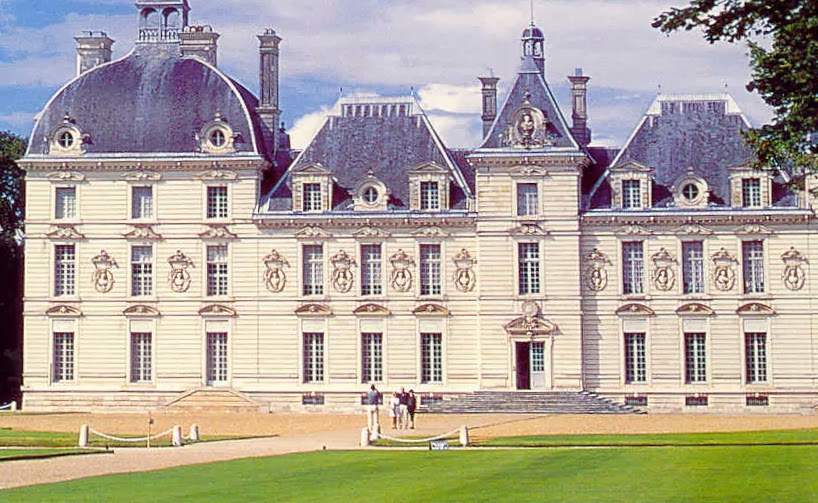
Cheverny dates from the classical period, built between 1604 and 1634 and is still  lived-in  by the  descendants of the original family.  Inside it features lavish furnishings, tapestries, and a collection of armor.  One of the highlight of a visit of Cheverny is the feeding of the kennel hounds- a pack of 70- used for hunting in the nearby forrest. 


Visit Enchanted France for custom tours to the Loire Valley and other beautiful regions of France  www.enchanted-france.com

tags; #loire valley,# france castles; # loire valley castles,# Chenonceau,#Chambord, # Villandry, # Cheverny, # Chateau de Blois# , # Chateau du Rivau, #Langeais castle

Saturday, February 1, 2014

Rouen from the Vikings to Emma Bovary

 This Spring, Enchanted France Normandy and Loire Valley Tour will be visiting Rouen, the historical capital of Haute Normandie.  This is a recommended destination in France for its historical, cultural and gastronomic delights.  For more information on the spring tour visit us here.  Let me share here some highlights.

Rouen is situated on the curve of the Seine River, 140 km northwest of the French capital.
Its long and rich history dates back to its founding by a Gaulish tribe, the Veliocasses who named  it Ratumacos.  When the Roman conquered Gaul, they changed its name to Rotomagus and it became a thriving gallo-roman settlement.  Flash forward a few centuries, in the late 10th century, the Vikings overrun the Lower Seine Valley and took over Rouen. In 911 Rouen became the capital of the duchy of Normandy until William the Conqueror built his castle in Caen in 1060.


For a time, Rouen was a prosperous town of a thriving independent Norman duchy until 1204 when the King of France, Philip Augustus entered Rouen and annexed it to the French crown thus ending Normandy  sovereignty status.  Two centuries later, during the Hundred Years War Rouen surrendered to the King Henry V of England in 1419 who  reclaimed Normandy back to the Plantagenet Dynasty.  As the capital of English power in occupied France, Rouen became the site of Joan of Arc's trial and execution.  She was burnt at the stake on Place du Marche May 1431.  Rouen was recaptured by the French King Charles VII in 1449, ending 30 years of English occupation.


Over the centuries, Rouen  thrived as a  commercial  and artistic center.  In the Renaissance and throughout the 17th century it was renowned for its cloth, ceramics and naval capabilities.  During WWII Rouen suffered much destruction as a number of  historical monuments were heavily damaged during the Battle of Normandy that took place between March and August 1944.  The city was liberated by the Canadian on  August 30,  1944 ending a four year German occupation.  In modern times the historic center of Rouen has been meticulously restored and since 2002 has been labelled by France's ministry of Culture and Patrimony as  a City of Art and History.  


Its mainly pedestrian core is fun to explore  starting with the gothic Cathedral Notre Dame dating from the 12th century and  remodelled in the 15th and 16th  century,  its two assymetric towers- Butter tower and Saint Romain and the central Lantern Tower  dominate the city skyline.  The intricately carved facade has been the favorite subject of painter Claude Monet in his 30 painting series of the cathedral executed between 1892-93 at different time and light of the day.  The paintings can be viewed at the Orsay museum in Paris.


Palais de Justice
The Justice court (Palais de Justice) was once the seat of Normandy Parliement.  Its architecture dates from the  early 16th century.  Heavily damaged during allied bombings in 1944, it has been restored to its gothic flamboyant magnificence.

Maison Sublime
It is interesting to note, that under the right staircase of the Palais de Justice courtyard, a hebrew inscription was discovered thirty years ago.  Experts believe  this site  was occupied by a renowned medieval yeshiva (rabinic school)  built around 1100 making this the oldest Jewish monument in France.  The Maison Sublime as it is known can be visited on Tuesday at 3PM and every last Fridays of each month.  


Gros Horloge- OT Rouen
Rouen's historic core features a number of restored timber-frame houses notably on rue Saint Romain, rue Martainville and rue Damiette.  On rue du Gros-Horloge you will find the clock Tower- an astronomical time-piece dating back to the 16th century.


Musee des Beaux Arts-OT Rouen
Rouen counts a number of worthy museums like the Musee des Beaux Arts  which holds paintings by great masters like Rubens, Veronese, Caravaggio, Velazquez and Delacroix as well as the second largest collection of Impressionist paintings in France.  The Ceramic museum, housed in the beautiful Hocqueville mansion (17-18th century)   displays an impressive collection of earthenware from local makers as well as from Delft and Nevers.

Gustave Flaubert
Rouen is the birthplace of many illustrious people  and notably painter   Gericault (Raft of the Medusa) and literature greats like  Pierre Corneille, the 17th century dramatist and 19th century novelist Gustave Flaubert.   The latter one, featured Rouen in his classic novel Madame Bovary; it is  here that the  bored and spoiled provincial housewife, Emma Bovary  conducts her adulterous affair with Leon. Of note also, French President Francois Hollande is a native of Rouen.


La Couronne
Rouen is also worth a stop for its renowned gastronomy as Julia Child experienced when she first set foot in France, driving from Le Havre to Paris.  She remembered fondly many years later in her memoirs the meal she so enjoyed at the restaurant La Couronne,  possibly the oldest inn in France and a still thriving gastronomic establishment in Rouen where you can savor classics like Breton Oysters, Sole Meuniere and Canneton a la Rouennaise

.


Join Enchanted France small group tour to Normandy and Loire Valley Castles this spring for a visit of Rouen .Click here for details.


www.enchanted-france.com

#Rouen,  #travel France, #Normandy, #Normandy Travel, #Rouen Cathedral, #Rouen gastronomy